Every other day there seems to be some marketing channel that the industry has declared “dead”. SEO, LinkedIn company pages, email marketing, blogs, founder content… and then the advice to focus on the new shiny object; video, TikTok, thought leadership, third-party review sites.
The problem here is that this marketing advice swings wildly between extremes. And the honest truth is your audience isn’t hanging around in one area online.
Brands either feel they need to be everywhere online at once, posting nonstop across every platform imaginable or they’re told to abandon entire channels completely and put all their energy into one strategy. And I’m here to tell you both of those approaches are wrong, not to mention not sustainable.
The reality is that today’s digital landscape is too fragmented and complex for brands to rely entirely on one channel, one platform, or one type of content. But it’s also unrealistic, and frankly unnecessary, to try and dominate every corner of the internet.
But the answer isn’t simple either. For your brand to succeed, you need to build a diverse marketing ecosystem that meets your audience where they are throughout the buying journey. It should be layered, it could be complex, but it ultimately should be strategic.
This is the topic we’re diving into today on the Friday blog.
The Digital Landscape Has Changed
Consumer behavior doesn’t follow a neat, predictable path anymore. Your customers might:
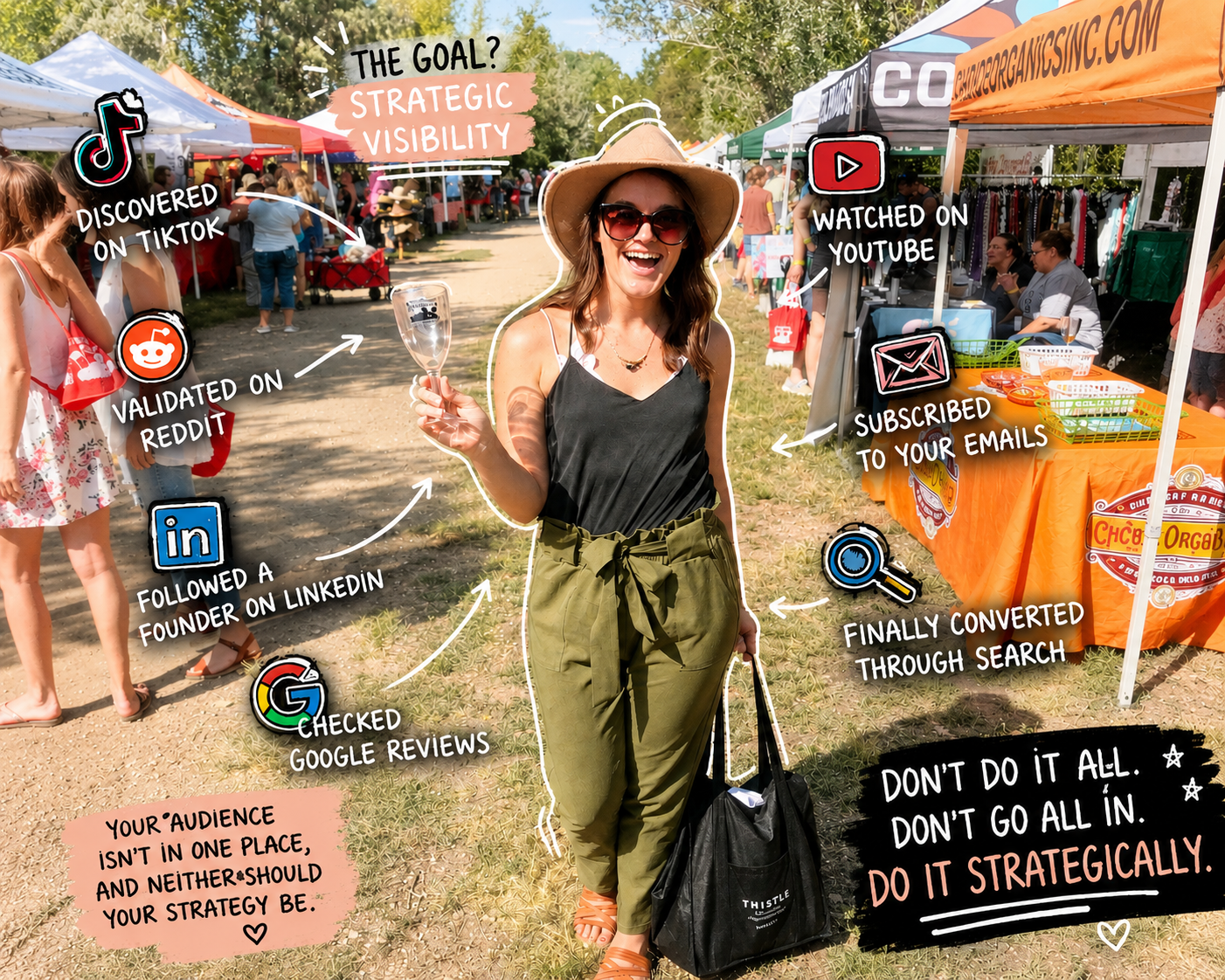
- Discover your brand on TikTok
- Validate your credibility through Reddit threads
- Follow your founder on LinkedIn
- Read your reviews on Google
- Subscribe to your email newsletter
- Watch your YouTube videos
- Finally convert after finding you through search
Modern customer journeys are layered and they bounce around.
People navigate between platforms constantly, and different audiences consume information in completely different ways. Some people spend a lot of time on LinkedIn, some hardly ever log in. Others search everything on YouTube or Pinterest. Some trust creators more than brands. Others still rely heavily on Google search or even Bing.
That’s why putting all of your marketing energy into one tactic is risky.
The Danger of Going “All In”
There’s been a huge rise in founder-led content and employee personal branding and I understand why. People connect with people and personal content has performed better organically for a long time now. It shows that audiences crave authenticity and expertise.
But somewhere along the way, some brands started interpreting that success as a reason to abandon their actual brand presence altogether. I’ve seen companies stop investing in their websites, neglect SEO, ignore their LinkedIn company pages, or rely entirely on one employee’s audience to drive visibility. And this isn’t a real strategy, it’s dependence.
Personal branding can absolutely be a powerful part of your marketing strategy. Founder content, employee advocacy, and thought leadership all matter. But they should support your overall ecosystem, not replace it.
Because platforms change, algorithms shift, reach will always constantly fluctuate, and employees can leave. That is too much vulnerability to have a “strategy” that goes all-in on one play.
When your entire marketing strategy depends on one platform or one person, it’s one small shift from crumbling quickly.
But You Also Don’t Need to Be Everywhere
At the same time, trying to show up on every single platform is a fast track to burnout.
A lot of businesses feel pressure to post daily, create content for every social platform, launch a podcast, send newsletters, invest in SEO, run a YouTube channel, repurpose content consistently, and the list continues. And not to mention, for a lot of brands, this is all on top of running an actual business.
This whole list might sound nice, but more channels or more content does not automatically equal better marketing. It will end up spreading your team too thin, usually leading to inconsistent execution, lower quality content, and frustration across the board.
You do not need to be everywhere, you need to be intentional.
The Better Approach: Strategic Channel Selection
Instead of asking “What platforms should we be on?”, begin with the following questions:
- Where does our audience actually spend time online?
- How do they research and validate purchasing decisions?
- What type of content aligns with our strengths?
- What can we realistically sustain consistently?
- Which channels support both short-term visibility and long-term growth?
That’s where strategy matters.
For some brands, it will look like LinkedIn + email + SEO. For others, TikTok + creator partnerships + community marketing may drive better results. The goal isn’t omnipresence, it’s strategic visibility.
Side Note: The amazing thing about digital marketing is to approach everything with a testing mindset as well. You should be tweaking your strategy over time to constantly be shifting to gain learnings and better performance.
Build a Marketing Ecosystem, Not a Marketing Identity Crisis
The strongest digital marketing strategies today are interconnected. Your channels should support one another.
- Social builds awareness
- Search captures intent
- Email nurtures relationships
- Personal brands build trust
- Content supports discoverability
- Video deepens engagement
- Communities create loyalty
Not every business needs every channel but most brands benefit from having multiple touchpoints that work together strategically. Modern marketing isn’t about chasing every new trend or abandoning proven tactics entirely. It’s about understanding how people actually discover, trust, and buy from brands today and build a focused strategy around that behavior.
If you’re in need of defining your marketing strategy or just want to bounce ideas around over a cup of coffee, connect with me at ashleyeiningmarketing@gmail.com


Leave a Reply